
Beyond Traditional Surgery: Exploring the Benefits of Nanoknife with Dr Fouad Khoury
Are you or a loved one facing a serious medical diagnosis, perhaps requiring surgery, and feeling overwhelmed by the thought of traditional procedures?
It’s completely normal to worry about recovery times, potential side effects, and the invasiveness of conventional operations.
Many patients in Lebanon and around the world are seeking gentler, more precise options.
That’s why we’re so excited to delve into the topic of Beyond Traditional Surgery: Exploring the Benefits of Nanoknife with Dr Fouad Khoury, a revolutionary approach offering new hope.
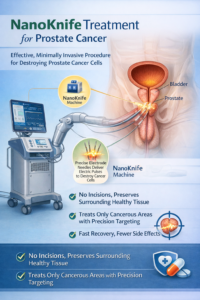
What Exactly is Nanoknife?
Nanoknife, also known as Irreversible Electroporation (IRE), is a minimally invasive technology that goes beyond what many expect from modern surgery.
Instead of heat or cold, it uses short, high-voltage electrical pulses to create microscopic pores in cell membranes.
This process permanently disrupts the cells, leading to their natural death, while preserving surrounding delicate structures like blood vessels, nerves, and bile ducts.
It’s a game-changer for treating soft tissue tumors in various organs.
How Does Nanoknife Work?
Let’s break down the science behind this innovative procedure.
The process is remarkably precise.
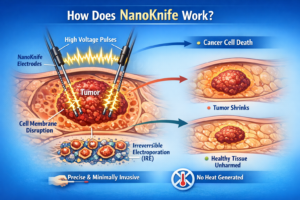
- Precision Targeting: Under imaging guidance (like ultrasound, CT, or MRI), tiny probes are inserted into or around the target tissue.
- Electrical Pulses: These probes then deliver controlled electrical pulses.
- Cellular Disruption: The pulses create irreversible nanopores in the cancer cell membranes, leading to programmed cell death (apoptosis).
- Tissue Preservation: Crucially, the non-thermal nature of Nanoknife means it avoids damaging the surrounding connective tissue matrix. This is vital for maintaining organ function and facilitating faster healing.
Why Consider Nanoknife? The Key Benefits
When compared to traditional surgical methods or other ablation techniques, Nanoknife offers several significant advantages.
Patients at Modern Care, for instance, have access to this advanced treatment.
- Minimally Invasive: Fewer incisions mean less pain, less blood loss, and a reduced risk of complications.
- Preservation of Function: Because it spares critical structures like blood vessels and nerves, Nanoknife is ideal for treating tumors near these vital areas, which might be inoperable with conventional surgery.
- Faster Recovery: Patients often experience a quicker return to their normal activities compared to open surgery.
- Reduced Scarring: Small entry points result in minimal, if any, visible scarring.
- Effective for Difficult-to-Reach Tumors: Its precision allows for treatment in areas that are challenging or risky for traditional surgery.
- Repeatability: The procedure can be safely repeated if necessary, offering flexibility in treatment plans, especially for certain types of cancer.
Nanoknife vs. Traditional Surgery: A Comparison
To better understand the distinct advantages, here’s a quick comparison.
| Feature | Nanoknife (IRE) | Traditional Surgery |
|---|---|---|
| Invasiveness | Minimally invasive (small probes) | Highly invasive (large incisions) |
| Tissue Damage | Targets cells, spares vital structures | Removes tissue, potentially damages adjacent structures |
| Recovery Time | Often shorter, outpatient/short hospital stay | Longer, extended hospital stay |
| Scarring | Minimal to none | Significant visible scars |
| Risk of Complications | Generally lower | Higher (bleeding, infection, nerve damage) |
| Application | Ideal for delicate areas, difficult tumors | Standard for large, accessible tumors |
Common Questions About Nanoknife
We often get asked various questions about this advanced procedure.
Here are some of the most common ones.
Is Nanoknife painful?
The procedure is performed under general anesthesia, so you won’t feel any pain during the treatment itself.
Afterward, some patients may experience mild discomfort, which can typically be managed with pain medication.
What types of conditions can Nanoknife treat?
Nanoknife is primarily used for treating soft tissue tumors in organs like the prostate, liver, pancreas, kidney, and lung.
It’s particularly effective for tumors located near vital structures that would be challenging to treat with traditional surgeries.
What is the recovery like after Nanoknife?
Recovery is generally much quicker than with open surgery.
Most patients can return home within a day or two and resume light activities within a week.
Your doctor will provide specific post-procedure instructions.
Considering your options? We can help! Call us at 96176887676 or book a consultation to get started.
Your Next Steps with Dr Fouad Khoury
Understanding your treatment options is the first step towards better health.
If you’re exploring advanced, less invasive methods for tumor treatment, Nanoknife with Dr Fouad Khoury might be the solution you’ve been looking for.
Dr. Khoury and our team at Modern Care are dedicated to providing the latest, most effective treatments with a focus on patient comfort and optimal outcomes.
We are committed to guiding you through every step of your journey.
Choosing to learn more about Beyond Traditional Surgery: Exploring the Benefits of Nanoknife with Dr Fouad Khoury can be a proactive step towards a healthier future.