
Rezum Water Vapor Therapy
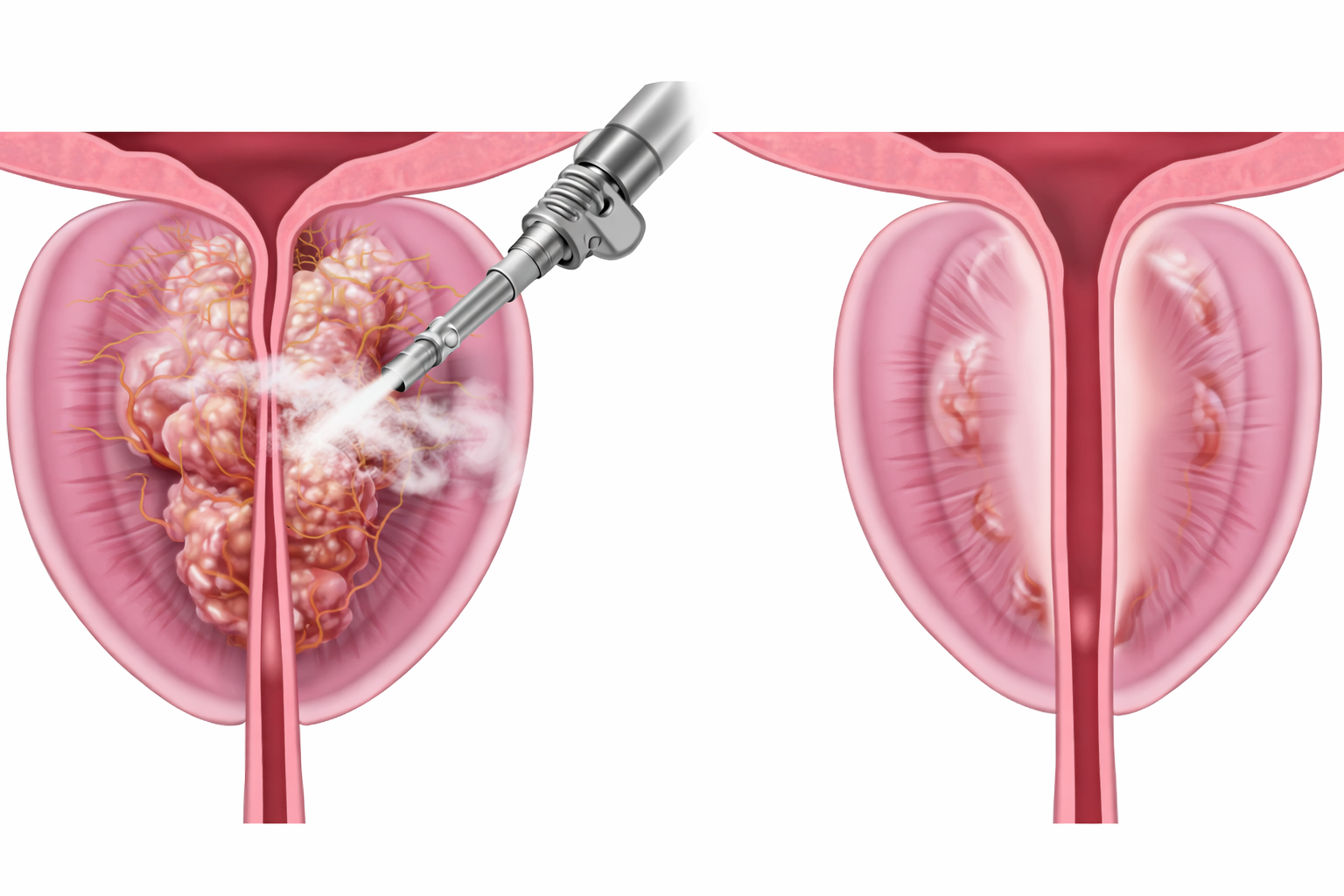
Rezum Water Vapor Therapy for Enlarged Prostate (BPH)
Rezum Water Vapor Therapy is a minimally invasive treatment for benign prostatic hyperplasia (BPH), commonly known as an enlarged prostate. The procedure uses targeted water vapor energy to reduce excess prostate tissue and relieve urinary symptoms without major surgery, without a hospital stay, and without the long-term medication that many men would otherwise take for years.
At Modern Care in Antelias, Lebanon, Rezum is performed as a day-case procedure by Dr. Fouad El Khoury. Most men are treated in under ten minutes and go home the same day. For men whose BPH symptoms are no longer controlled by tablets, but who want to avoid the recovery time and the sexual side effects associated with conventional prostate surgery, Rezum sits precisely in that gap.
How Rezum Water Vapor Therapy Works
The prostate surrounds the urethra, the tube that carries urine out of the bladder. As the gland enlarges with age, it squeezes that tube, which is what produces a weak stream, hesitancy, incomplete emptying and repeated trips to the bathroom at night. Rezum removes the tissue causing that obstruction.
A small scope is passed into the urethra. A retractable needle delivers a nine-second burst of sterile water vapor directly into the obstructing prostate tissue. The vapor spreads through the tissue and releases its stored thermal energy into the cells, which are then absorbed and cleared by the body over the following weeks. Because the vapor stays within the treated zone, the surrounding structures, including the nerves responsible for sexual function, are left intact.
Several injections are usually needed to treat the whole obstruction. The number depends on the size and shape of your prostate, which is assessed before treatment.
- Minimally invasive outpatient procedure
- No major surgical incisions
- Preservation of sexual function in most cases
- Short treatment time
- Quick return to daily activities
- Treatment for enlarged prostate (BPH)
- Relief of weak urinary stream
- Reduced nighttime urination
- Improved bladder emptying
- Alternative to long-term medication
Why Choose Rezum Therapy
Rezum offers effective symptom relief for men with an enlarged prostate while avoiding the risks of traditional surgery. By using controlled water vapor energy, the procedure reduces obstructive prostate tissue with minimal downtime and durable clinical results. The following sections set out who it suits, what the day itself involves, and what to expect afterwards.
Who Is a Candidate for Rezum?
Rezum is generally suitable for men with moderate to severe lower urinary tract symptoms caused by BPH, typically with a prostate volume in the region of 30 to 80 cc. It is often the right choice for men who no longer get adequate relief from medication, men who cannot tolerate the side effects of BPH tablets, and younger men who want to preserve ejaculatory function. It can also be an option for men who wish to avoid general anaesthesia.
Rezum is not appropriate for every prostate. Very large glands, certain anatomical patterns, an implanted prostatic stent, or urinary symptoms driven by a cause other than BPH may all point towards a different treatment. This is why assessment matters more than the label of the procedure.
What Happens on the Day of the Procedure
Rezum is performed as an outpatient procedure under local anaesthetic with light sedation. You arrive, are prepared, and the treatment itself typically takes five to ten minutes. A urinary catheter is usually placed afterwards to allow the prostate to settle while the initial swelling passes, and it is generally removed within three to seven days. Most men go home the same day and return to light daily activity within forty-eight hours.
Recovery and Results Timeline
Improvement with Rezum is gradual rather than immediate, because the body needs time to reabsorb the treated tissue. Most men notice the first change around two weeks after treatment. Symptoms continue to improve over the following weeks, and the full benefit is usually reached by around three months. Strenuous exercise and heavy lifting are normally avoided for the first two weeks.
Published five-year follow-up data show that the symptom improvement achieved with Rezum is durable, with only a small minority of men going on to need a further surgical procedure. Individual results vary, and your own outlook is best discussed in consultation.
Rezum Compared With Other BPH Treatments
Compared with long-term medication, Rezum is a single treatment rather than a daily tablet, and it removes the cause of the obstruction rather than managing it. Compared with prostate laser surgery or TURP, Rezum involves no cutting or removal of tissue during the procedure, requires no general anaesthetic, and carries a substantially lower risk of retrograde ejaculation. The trade-off is that the larger surgical options tend to produce a faster and, in very large prostates, a more complete result. Modern Care offers prostate laser surgery as well, so the recommendation can be matched to your anatomy rather than to the equipment available.
Possible Side Effects
Side effects after Rezum are usually temporary and settle as the prostate heals. They commonly include burning on passing urine, increased urgency and frequency, and traces of blood in the urine or semen for a few weeks. More significant complications are uncommon. Any procedure carries some risk, and the specific risks in your case will be explained in full before you consent to treatment.


Rezum Therapy – Frequently Asked Questions
Below are common questions about Rezum Water Vapor Therapy for enlarged prostate (BPH). A personalised consultation is required to determine whether this treatment is appropriate for you.
Is Rezum painful?
The procedure is performed under local anaesthetic with light sedation, so it is generally well tolerated. Most men describe pressure rather than pain. Some burning or urgency when passing urine is normal for the first one to two weeks afterwards.
How long does Rezum take?
The treatment itself usually takes five to ten minutes. Including preparation and recovery, you should expect to be at the clinic for a few hours, and you go home the same day.
Will Rezum affect my sexual function?
Preserving sexual function is one of the main reasons men choose Rezum. Clinical studies have not shown a reduction in erectile function, and rates of retrograde ejaculation are markedly lower than with conventional prostate surgery.
Do I need a catheter after Rezum?
Usually yes. A catheter is placed to let the prostate settle while the initial swelling subsides, and it is typically removed within three to seven days.
How soon will I notice an improvement?
Most men notice the first improvement about two weeks after treatment, with continued progress over the following weeks. The maximum benefit is usually reached by around three months.
How long do the results last?
Five-year follow-up data show durable symptom relief, with only a small proportion of men requiring a further procedure. Rezum treats the obstructing tissue rather than masking the symptoms.
Can I stop my BPH medication after Rezum?
Many men are able to come off their BPH tablets after treatment. This should only be done on the advice of your urologist, and never stopped abruptly on your own.
Am I a candidate for Rezum in Lebanon?
Candidacy depends on your symptoms, your prostate size and shape, and the cause of your urinary problems. Assessment at Modern Care includes a clinical review and prostate imaging. Book a consultation to find out whether Rezum is right for you.