
Prostate Laser Surgery
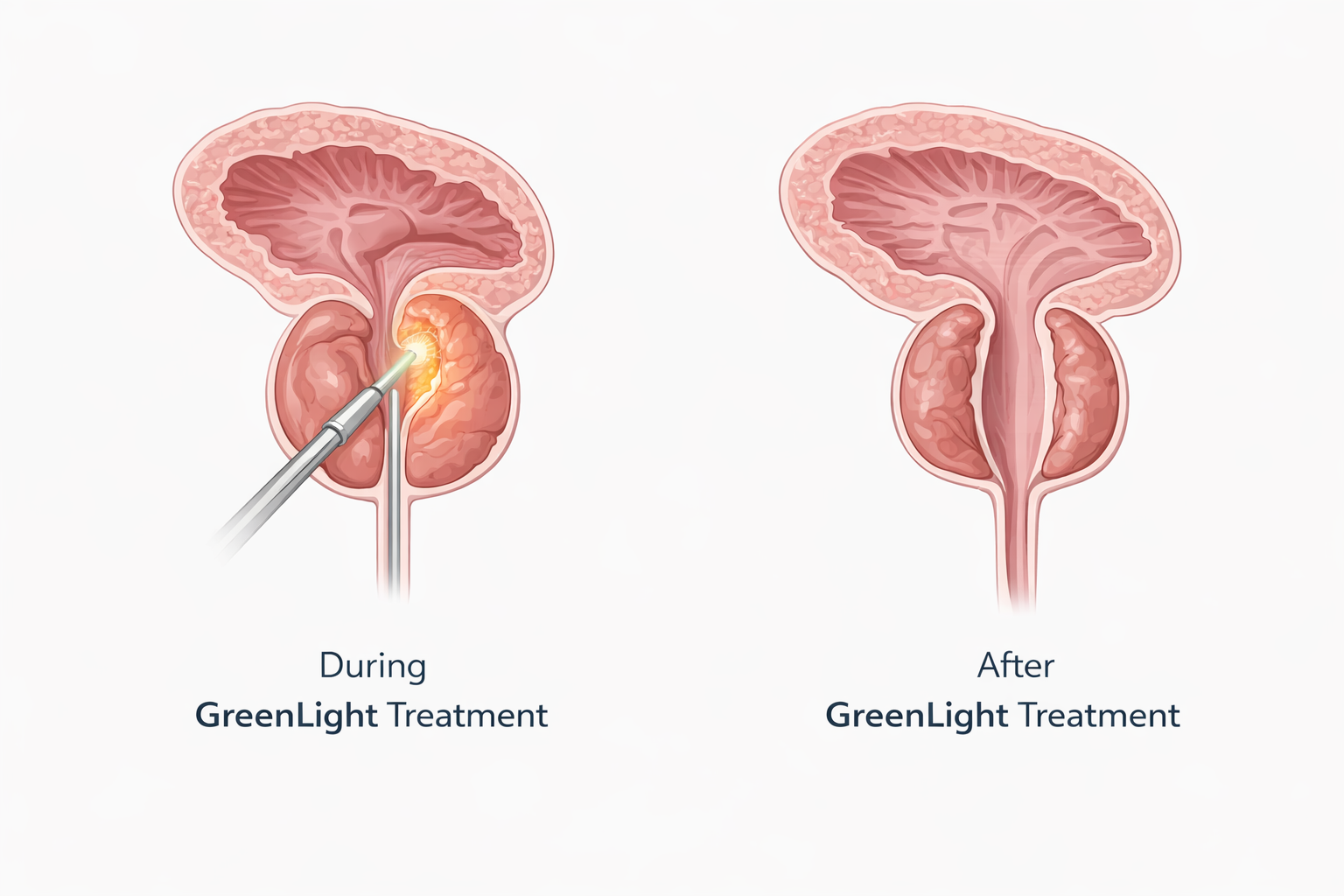
Advanced Prostate Laser Surgery
Prostate laser surgery is a modern, minimally invasive treatment for benign prostatic hyperplasia (BPH), also known as prostate enlargement. Using advanced laser technology, the procedure removes excess prostate tissue that blocks urine flow, providing rapid symptom relief while minimizing bleeding and recovery time.
- Effective treatment for enlarged prostate (BPH)
- Minimally invasive laser technology
- Immediate improvement in urinary flow
- Reduced bleeding compared to traditional surgery
- Short hospital stay and faster recovery
- Precise removal of obstructive prostate tissue
- Suitable for moderate to severe prostate enlargement
- Lower risk of complications
- Long-term relief of urinary symptoms
- Performed by experienced urological specialist
Benefits of Prostate Laser Surgery
Laser prostate surgery offers an advanced alternative to traditional prostate procedures. By targeting excess tissue with high-precision laser energy, the treatment improves urinary function while reducing surgical trauma, hospital stay, and recovery time.


Prostate Laser Surgery – Frequently Asked Questions
Below are the questions men most often ask about laser surgery for an enlarged prostate. A consultation and prostate imaging are needed before this treatment can be recommended.
What is prostate laser surgery?
Laser energy is delivered through the urethra to vaporise or remove the prostate tissue that is obstructing urine flow in benign prostatic hyperplasia. There is no external incision; the whole procedure is performed through the natural urinary passage.
How is it different from a traditional TURP?
Both remove obstructing tissue through the urethra. The laser seals blood vessels as it works, so bleeding is substantially lower, catheter time is shorter and the hospital stay is usually a single night or less. That makes it a particularly useful option for men taking blood thinners.
How does laser surgery compare with Rezum?
Laser surgery removes the obstructing tissue during the procedure itself, which gives faster and more complete relief, especially in larger prostates. Rezum water vapor therapy is gentler, needs no general anaesthetic and carries a much lower risk of retrograde ejaculation, but it works gradually over about three months. The right choice depends on your prostate size and on what matters most to you.
What kind of anaesthetic is used?
Spinal or general anaesthesia. Depending on the size of the prostate and how the procedure goes, you are treated as a day case or stay a single night.
Will I need a catheter afterwards?
Yes, usually for about twenty-four hours, occasionally up to forty-eight. It allows the initial swelling to settle and lets the urine run clear before you go home.
How soon will my symptoms improve?
Most men notice a stronger stream as soon as the catheter is removed. Frequency and urgency take longer, typically settling over four to six weeks as the bladder recovers from years of working against an obstruction.
Will it affect my sexual function?
Erectile function is usually preserved. Retrograde ejaculation, where semen passes back into the bladder instead of out, is common after laser prostate surgery. It is harmless, but it does affect fertility, so tell your surgeon beforehand if fathering children is a consideration.
Does prostate laser surgery treat prostate cancer?
No. It treats benign enlargement only. If prostate cancer is suspected or confirmed, entirely different treatments apply, including robotic prostate surgery. Book a consultation for a full assessment.