
Robotic Surgery
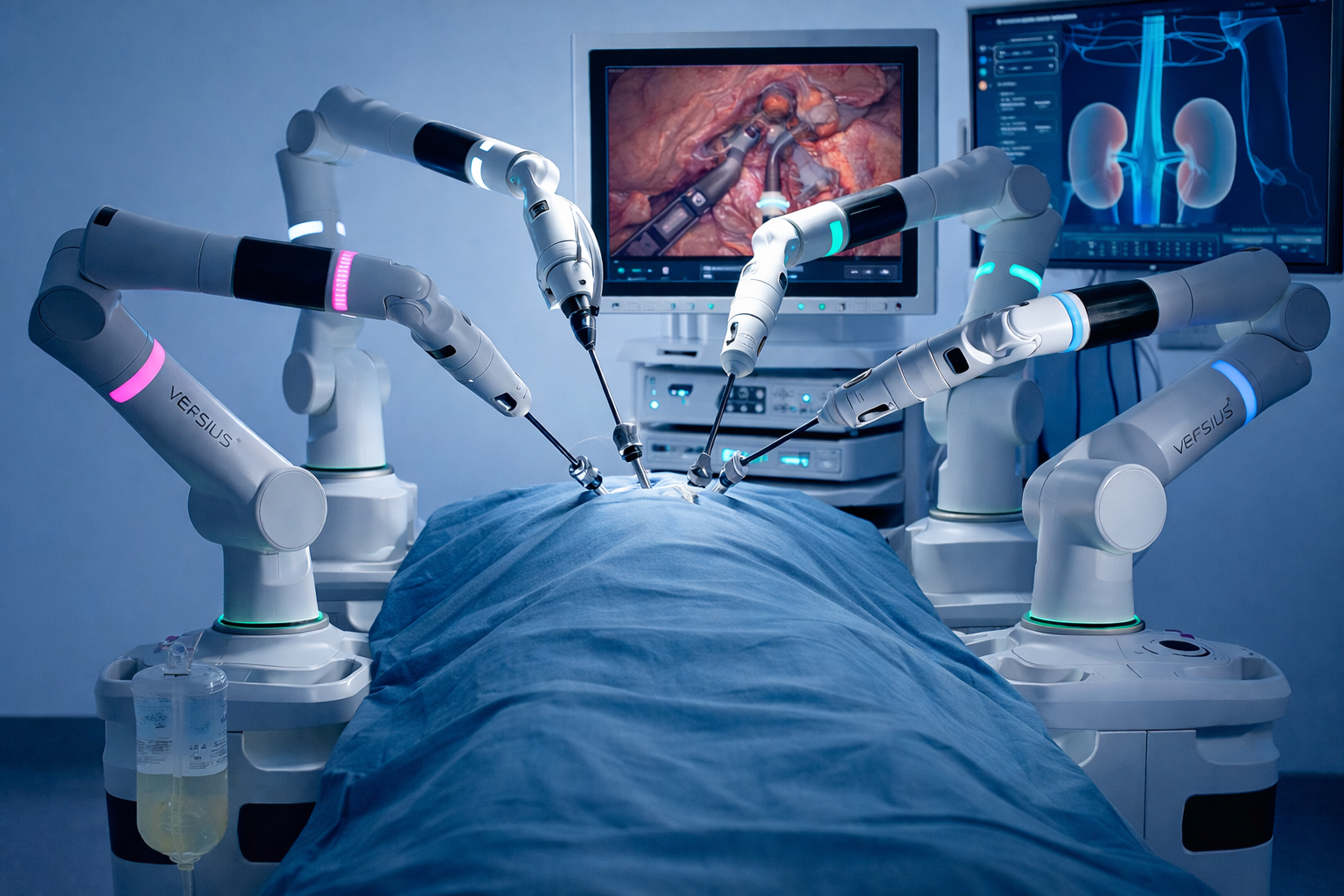
Advanced Robotic Surgery in Urology
Robotic-assisted urological surgery represents the most advanced evolution in minimally invasive surgical care. At Moderncare, procedures are performed using state-of-the-art robotic systems that enhance precision, visualization, and surgical control for complex urological conditions.
Dr. Fouad El Khoury is internationally trained in robotic urological surgery and actively involved in surgical education through ORSI Academy in Belgium, one of the world’s leading robotic surgery institutes.
- High-definition 3D magnified surgical visualization
- Superior precision for delicate nerve-sparing procedures
- Reduced blood loss and minimal scarring
- Shorter hospital stay
- Faster recovery compared to open surgery
- Advanced treatment for prostate cancer
- Robotic partial and radical nephrectomy
- Bladder cancer surgery
- Complex urological reconstructions
- Improved functional preservation when appropriate
Why Choose Robotic Surgery
Robotic surgery allows enhanced surgical accuracy through articulated instruments and magnified 3D vision. This approach improves surgical precision while minimizing trauma to surrounding tissues, supporting safer procedures and faster postoperative recovery.


Robotic Surgery – Frequently Asked Questions
Below are the questions men most often ask before robotic urological surgery at Modern Care. A consultation is required to decide whether a robotic approach is right for your case.
What is robotic urological surgery?
The surgeon operates from a console that controls miniaturised instruments placed inside the body through small incisions. The instruments articulate more freely than the human wrist, and the view is magnified and three-dimensional. The robot does not act on its own; every movement is directed by the surgeon in real time.
Which urological conditions can be treated robotically?
The most common are prostate cancer, treated by radical prostatectomy, and kidney tumours, treated by partial or radical nephrectomy. Bladder cancer surgery and reconstructive procedures such as pyeloplasty are also performed robotically. Suitability depends on the stage of disease, your anatomy and your general health.
Is robotic surgery better than open surgery?
For most urological cancers the robotic approach means less blood loss, smaller incisions, a shorter hospital stay and a faster return to normal activity, with comparable cancer control in experienced hands. Open surgery remains the better choice in certain situations, and that judgement is made case by case rather than by default.
Will robotic prostate surgery affect continence and erections?
Nerve-sparing technique is used wherever the extent of the cancer allows, and the magnified three-dimensional view makes that dissection more precise. Most men regain urinary control within the first months after surgery. Recovery of erections is slower and depends on your age, your erectile function before surgery, and how much nerve tissue could safely be preserved.
How long is the hospital stay?
Usually one to two nights for a robotic prostatectomy or nephrectomy, compared with several days after the equivalent open operation.
How long does recovery take?
Most patients are walking on the day of surgery and home within forty-eight hours. Desk work is usually possible after two to three weeks, and full physical activity by around six weeks. Heavy lifting is avoided for the first month.
Who performs robotic surgery at Modern Care?
Dr. Fouad El Khoury, who trained internationally in robotic urology and teaches at ORSI Academy in Belgium, one of the leading robotic surgery institutes in Europe. Robotic surgery at Modern Care is offered alongside laparoscopic surgery, so the approach is matched to the case rather than to the equipment.
How do I find out whether I am a candidate?
Candidacy is decided after review of your imaging, your biopsy results where relevant, and your medical history. Book a consultation to have your case assessed.