
Laparoscopic Surgery
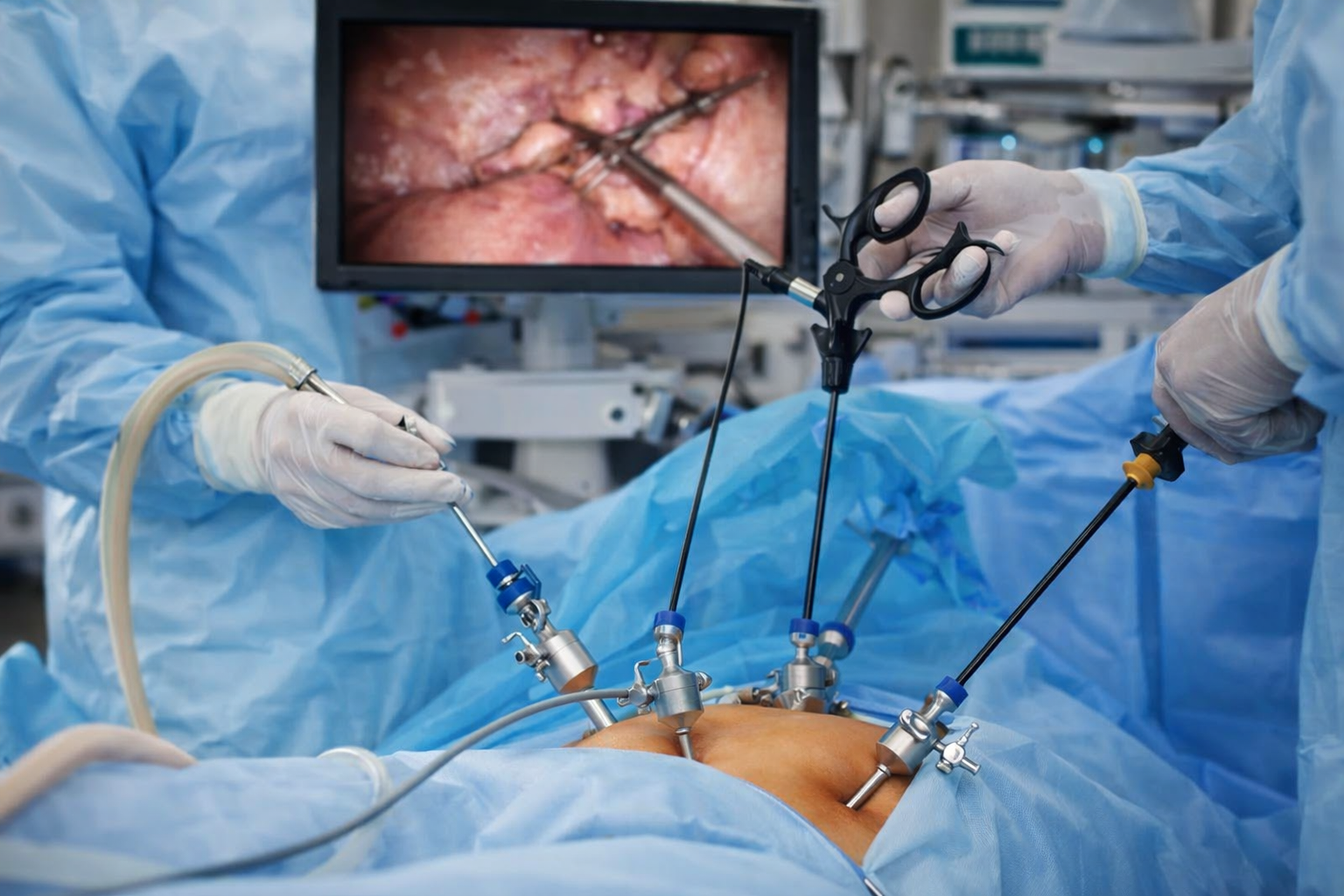
Advanced Laparoscopic Urological Surgery
Laparoscopic urological surgery is a minimally invasive technique that allows complex procedures to be performed through small incisions using specialized instruments and high-definition visualization. At Moderncare, laparoscopic surgery is used to treat a wide range of urological conditions with precision and reduced recovery time.
- Smaller incisions with minimal scarring
- Less blood loss than open surgery
- Reduced postoperative pain
- Shorter hospital stay
- Faster return to daily activities
- Treatment of kidney tumors
- Management of adrenal masses
- Removal of non-functioning kidneys
- Urological reconstructive procedures
- Selected prostate and bladder conditions
Why Choose Laparoscopic Surgery
Laparoscopic surgery offers effective treatment with less surgical trauma compared to traditional open procedures. Through enhanced visualization and refined technique, this approach supports safer operations and improved postoperative recovery.


Laparoscopic Surgery – Frequently Asked Questions
Below are the questions patients most often ask about laparoscopic urological surgery at Modern Care. A personalised consultation is required for individual assessment.
What is laparoscopic urological surgery?
It is keyhole surgery. Instead of one long incision, the surgeon works through several ports of roughly five to twelve millimetres. A camera and long, slim instruments pass through those ports, and the operation is performed while watching a magnified view on a monitor.
How is laparoscopic surgery different from robotic surgery?
Both are keyhole approaches through the same small incisions. In laparoscopy the surgeon holds and moves the instruments directly. In robotic surgery the instruments are mounted on a console-controlled system that adds wrist articulation and three-dimensional vision. Laparoscopy remains an excellent and often the more practical option, particularly for kidney and adrenal work.
Which procedures can be performed laparoscopically?
Removal of kidney tumours, adrenal masses and non-functioning kidneys, reconstructive procedures such as pyeloplasty for a blocked kidney, and selected prostate and bladder operations.
Is laparoscopic surgery safe?
The technique has been well established in urology for more than thirty years. As with any operation there are risks, including bleeding, infection, injury to nearby structures, and an occasional need to convert to an open procedure if the anatomy demands it. The specific risks in your case are explained in full before you consent.
How painful is the recovery?
Markedly less than after open surgery, because the abdominal wall muscles are not divided. Most patients need only simple painkillers after the first day. Discomfort in the shoulder tip is common in the first day or two and comes from the gas used to inflate the abdomen; it settles on its own.
How long before I can go back to work?
Two to three weeks for desk work and four to six weeks for physically demanding jobs. Driving usually resumes once you can perform an emergency stop without discomfort.
Will I be left with visible scars?
The incisions are between five and twelve millimetres and are placed where they are least conspicuous. They usually fade to thin lines over several months.
How do I know whether I am suitable?
Previous abdominal surgery, body build, and your cardiac and respiratory fitness all influence the decision, because keyhole surgery requires the abdomen to be inflated for the duration of the operation. Book a consultation for an assessment.