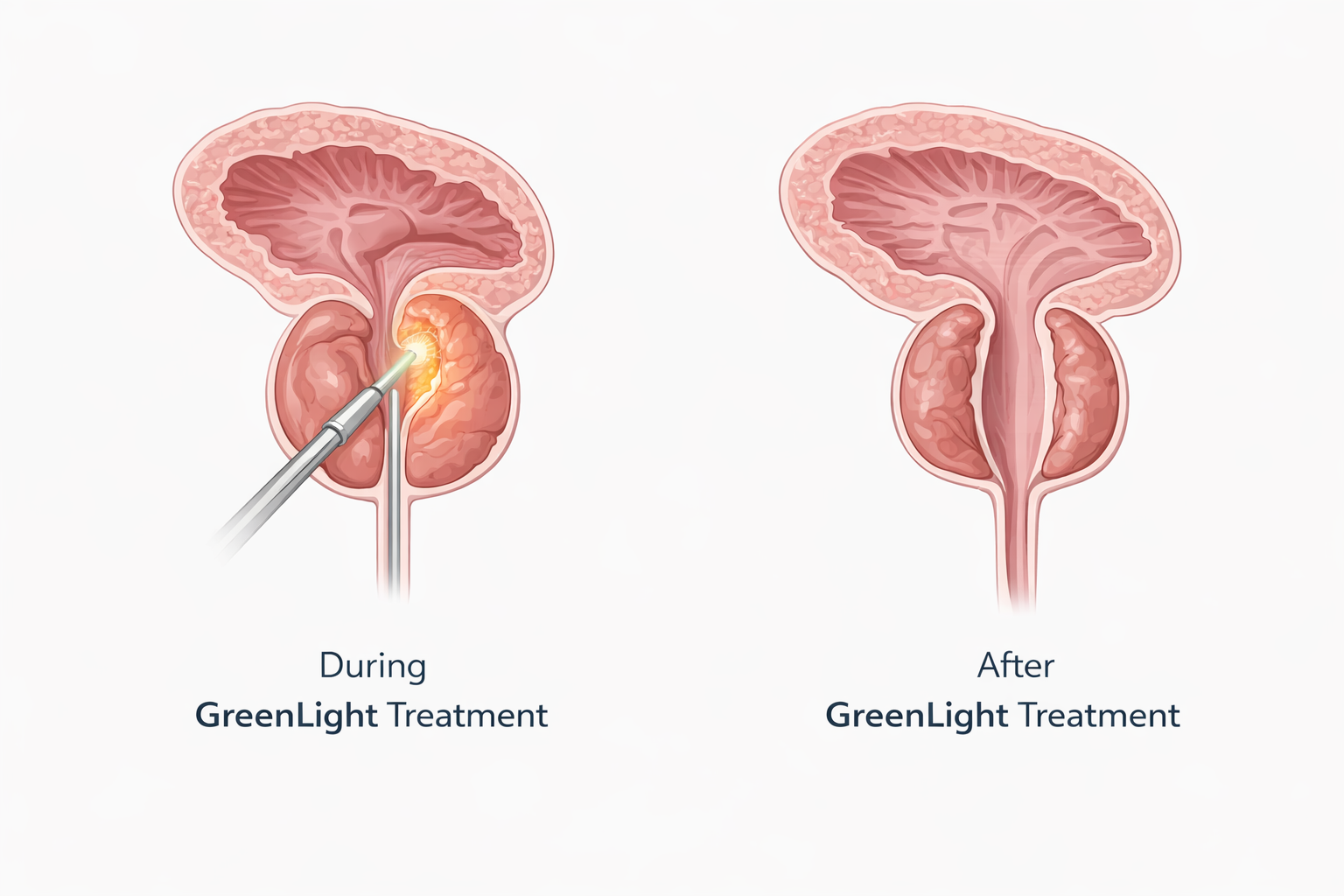
Prostate laser surgery is a modern, minimally invasive treatment for benign prostatic hyperplasia (BPH), also known as prostate enlargement. Using advanced laser technology, the procedure removes excess prostate tissue that blocks urine flow, providing rapid symptom relief while minimizing bleeding and recovery time.
Effective treatment for enlarged prostate (BPH)
Minimally invasive laser technology
Immediate improvement in urinary flow
Reduced bleeding compared to traditional surgery
Short hospital stay and faster recovery
Precise removal of obstructive prostate tissue
Suitable for moderate to severe prostate enlargement
Lower risk of complications
Long-term relief of urinary symptoms
Performed by experienced urological specialist
Benefits of Prostate Laser Surgery
Laser prostate surgery offers an advanced alternative to traditional prostate procedures. By targeting excess tissue with high-precision laser energy, the treatment improves urinary function while reducing surgical trauma, hospital stay, and recovery time.
Frequently Asked Questions
Learn more about prostate laser surgery, how the procedure works, recovery expectations, and what results patients typically experience after treatment for enlarged prostate (BPH).